
Key Takeaways:
- An optimized Google Business Profile drives local search visibility and customer calls.
- Consistent name, address, and phone numbers across online platforms boost trust signals and rankings.
- Dedicated service and location pages capture high-intent local searches effectively.
- Addressing common customer concerns builds expertise and establishes trust early in the buyer’s journey.
- Structured data and schema markup make businesses easier to find in AI searches.
- A fast and easy-to-navigate mobile site directly affects conversion rates.
What happens when a homeowner’s air conditioner stops working on a 95-degree afternoon? They grab their phone and search “HVAC repair near me”, as they expect immediate answers.
That moment decides which contractor gets the call. Home services SEO (Search Engine Optimization) determines who shows up. But these days, customers no longer find businesses through Google alone. They also meet them on Google Maps, in local packs, and through AI-generated search results. This visibility drives leads and booked jobs for HVAC (Heating, Ventilation, and Air Conditioning) contractors, roofers, plumbers, landscapers, and solar installers.
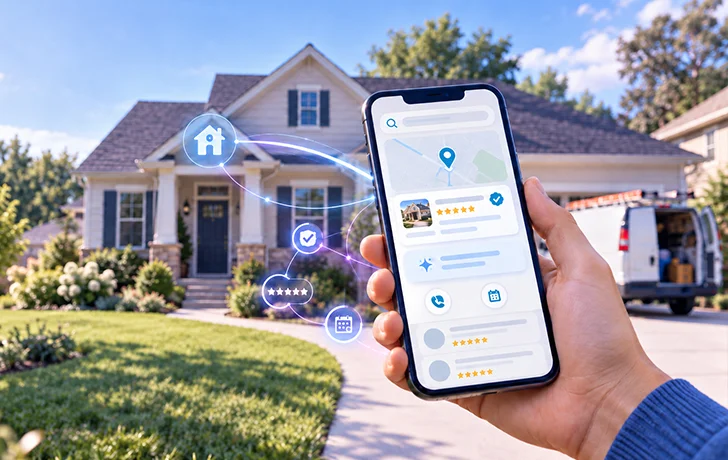
This home services SEO guide explains how local service businesses can optimize for Google and AI searches and capture high-intent customers looking for assistance.
What Is Home Services SEO and Why Does It Matter?
Home services SEO is the process of optimizing a contractor’s website and online presence to attract local customers seeking specific services. Plumbers, HVAC technicians, roofers, electricians, and landscapers need to appear when homeowners search for help within their service area.
This approach differs from general SEO in many ways. First, searches carry strong location signals. Second, customer intent runs high. Someone who searches “emergency plumber near me” needs help right away. Third, the path from search to conversion is short. Homeowners compare a few options and check reviews. Then they call the business that seems most credible and available.
Research shows that 97%1 of people learn about a local company online more than anywhere else. Search engines function as the modern word-of-mouth referral system. Businesses missing from the first page lose leads to competitors who invested in visibility.
SEO for home services delivers lasting results without endless ad spending. Paid advertising demands ongoing investment to maintain lead flow. A website that ranks well for relevant local searches gets qualified leads month after month. This makes SEO a budget-friendly marketing channel for contractors who compete against companies with massive budgets for digital advertising.
The visibility equation has moved beyond traditional Google results today. Homeowners now find businesses through Google Maps and local pack results. Many times, they discover them through AI-generated search responses. Each touchpoint requires structured business information that both search engines and AI systems can interpret accurately.
Strong rankings connect to business outcomes. Search visibility drives profile views, phone calls, and quote requests that turn into booked jobs. For home service businesses, qualified local traffic matters more than total website visits. A hundred searches from homeowners within the service area outperform a thousand visits from users outside the coverage zone or without purchase intent.
Build the Local SEO Foundation First
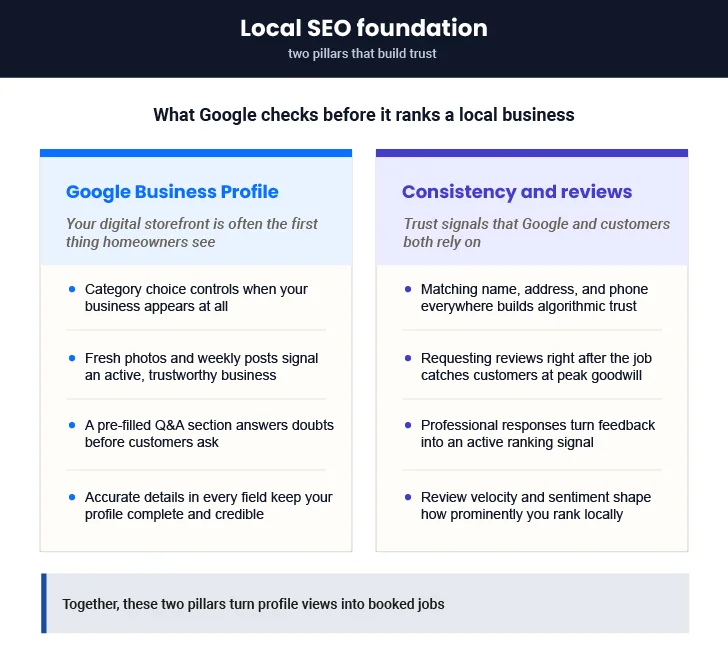
Local search rankings rest on three foundational elements: Google Business Profile optimization, consistent business information, and review management. Businesses that skip these steps find it difficult to rank, no matter how good their website is.
1. Optimize Your Google Business Profile
Google Business Profile functions as the digital storefront homeowners see before reaching your website. Many consumers go straight to Google Business Profiles for contact information rather than visiting websites.
Every field in the profile needs accurate information: business name, address, phone, website, hours, service area, and categories. The main category requires careful selection because it acts as a gatekeeper when your business shows up in searches. An HVAC company that selects “Heating contractor” instead of “HVAC contractor” narrows its visibility without realizing it.
Upload top-quality photos that show your completed projects. Additionally, post weekly updates about seasonal promotions and community involvement. Add a section to tackle common queries before customers even ask them.
2. Keep Business Information Consistent
Consistency in NAP (name, address, phone number) tells Google that your business is stable and trustworthy. These data points must match across your website, Google Business Profile, social platforms, and local directories. When Google spots conflicting information, its confidence in a listing drops and rankings suffer. Users also lose trust in your brand if your business listing contains inaccurate data.
3. Make Reviews Part of the SEO Process
Reviews function as both ranking signals and trust signals. Google has confirmed that responding to reviews improves local ranking. The best time to request a review is right after project completion.
When sending a request, a review link through text message works better than email because most text messages get opened and read within three minutes2 of delivery. And once reviews come in, it is important to respond to them professionally, because around 89%3 of people expect a response when they leave feedback.
Local SEO for Home Services: A Comprehensive Guide to Dominating Your Market
Create Service and Location Pages That Match Search Intent
Generic service pages seldom work. They try to rank for everything and end up ranking for nothing. Around 46%4 of Google searches carry local intent, which means homeowners search with specific services and locations in mind. Dedicated pages that match these search patterns capture traffic right when someone decides to hire.
I. Build Dedicated Pages for Your Core Services
Each major service deserves its own page, built around what homeowners need to know. A roofing company, for example, needs separate pages for roof repair and roof replacement because these represent different problems, budgets, and urgency levels. For solar businesses, dedicated solar SEO services pages can similarly target specific installation, maintenance, and solar-related searches.
Service pages should explain what the job involves, when someone needs it, and why they should call. Pricing factors, process details, and trust signals like certifications or warranties relevant to that service belong here. FAQs addressing the doubts that homeowners carry before calling also need to be added.
II. Create Location Pages with a Real Local Purpose
Businesses that serve multiple areas benefit from location-specific pages only when they add genuine local value. Strong location pages include actual neighborhood references and project examples from that area. Response time details and customer testimonials from the community add further proof.
Template pages that simply swap city names damage rankings more than they help. Google can tell the difference between a page written for a location and a page that merely mentions it. It ranks the first one far higher.
III. Optimize for High-Intent Searches
High-intent keywords fall into four categories:
- “Near me” searches signal that someone is ready to hire and choosing who to call.
- Service plus city combinations like “water heater replacement [city]” indicate a project underway.
- Emergency searches convert at very high rates because homeowners need immediate help.
- Evaluation searches containing “best” or “reviews” come from buyers in the final stretch, comparing their last few options.
Focusing on 20-30 highly relevant terms that align with your services and service areas produces better results than chasing hundreds of random keywords.
Create Content That Answers the Questions Homeowners Ask
Many customers research extensively before calling. They want to know your costs, timelines, and whether they can trust your business. Addressing these concerns positions you as an expert. It also supports both traditional and AI search visibility. These home services marketing strategies help businesses connect useful content with high-intent searches.
“You need to create ridiculously good content, content that is useful, enjoyable and inspired.”
Ann Handley, Chief Content Officer, MarketingProfs
1. Cost and Pricing Questions
Homeowners want pricing transparency before they make contact. It is important to walk them through factors that affect your pricing: materials and labor, overhead, and project complexity. Explain how you charge: flat rate, hourly, or by project. Regional pricing differences also matter here. Addressing “how much does [service] cost” searches eases hesitation and attracts serious buyers.
2. Maintenance and Prevention Guides
Seasonal maintenance checklists catch small problems before they become emergencies. Organizing checklists by season (e.g., gutter cleaning in spring, HVAC tune-ups in fall, pipe protection in winter) matches how homeowners plan maintenance. Emergency repairs usually cost a lot more than routine maintenance, and this makes prevention content valuable.
3. Seasonal Problems and Solutions
Homeowners search for solutions to seasonal issues: frozen pipes in winter, AC failures in summer, gutter overflow during storms. Addressing these patterns helps you capture high-intent traffic during peak demand periods.
4. Service Comparisons and Options
Comparing service options (repair methods, material choices, service levels) helps customers understand trade-offs. Explaining when to choose one approach over another builds trust and guides decision-making without requiring contact right away.
Optimize Your Website for AI Search as Well as Google
AI-powered search tools answer homeowners’ questions directly without requiring clicks to websites. AI search optimization creates clear, accurate content that helps these systems understand your services and generate reliable answers. Businesses looking to improve visibility across AI-driven platforms can also explore Ai search optimization for home services for additional guidance.
I. Make Your Business Easy for AI Systems to Understand
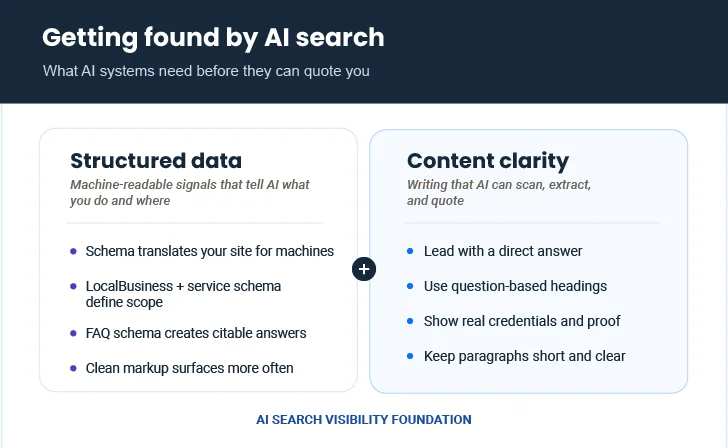
Structured data translates your website’s content into machine-readable language.
- LocalBusiness schema helps AI platforms understand your service areas and contact details.
- Service schema defines your specific offerings like roofing or plumbing.
- FAQ schema supports question-answer content.
The payoff is real: pages with proper schema markup show up more often in AI-generated answers.
II. Answer Questions Clearly and Completely
AI systems extract information from content with clear headings and concise paragraphs. Pages structured for scanning get higher visibility in AI results. It’s recommended to start sections with direct answers before expanding details. Question-based headings like “How to reduce energy costs with new HVAC” tell readers and AI systems what’s inside, so they work better than vague titles.
III. Strengthen Trust and Entity Signals
Content from sources with strong E-E-A-T (Experience, Expertise, Authoritativeness, and Trustworthiness) signals frequently receives citations from AI platforms. Trust signals include visible credentials and content showing your first-hand experience through specific project examples. Consistent NAP information on every platform also strengthens your local relevance.
Turn Demand into Profitable Growth in 2026 with Solar Marketing
Do Not Overlook Technical SEO and Conversion Experience
None of the above factors matter if a site cannot hold onto a visitor. Technical performance decides whether someone becomes a customer or leaves. A slow load or a clunky mobile experience can lose you the call even before it is made.
1. Improve Site Speed
Speed determines whether homeowners stay or leave. A few fixes go a long way. Compress images without sacrificing quality using tools like TinyPNG. Use browser caching to store static files on users’ devices locally. Additionally, minimize unnecessary HTML, CSS, and JavaScript to improve loading times.
2. Boost Performance on Mobile Devices
Mobile optimization matters more than many contractors realize. Around 73%5 of local searches start on mobile devices. Google looks at the mobile version of websites first when determining rankings. For this reason, it is essential to make your buttons easy to tap, phone numbers clickable, and contact forms simple. Responsive design serves the same URL on devices of all types. This saves resources for both the website and Google’s crawlers.
3. Use Clear Calls-to-Action and Contact Options
Click-to-call buttons let mobile users dial with one tap. Limit your mobile contact forms to essentials: name and phone number. Make every CTA (Call-to-Action) impossible to miss, with bold text or a bright button. Place primary CTAs above the fold, so visitors can see them without scrolling. Sticky CTAs that remain visible as users scroll prevent potential customers from searching for contact information.
Build Local Authority Beyond Your Website
Citations and backlinks from trusted local sources reinforce rankings when on-site optimization alone reaches its limit. These off-site signals confirm business legitimacy and local relevance beyond what happens on the website itself.
I. Earn Citations in Local Directories
Business directories where you submit your name, address, phone number, and service details display structured citations. Not all directories are equal, though. Niche directories for home services carry more weight than general listing sites no one recognizes.
Start with the platforms that matter most: Yelp, Nextdoor, Angie’s List, and HomeAdvisor. Chamber of Commerce directories provide strong local authority. Likewise, council and government directories for approved contractors are a great way to get high credibility despite strict requirements.
II. Get Backlinks from Local Sources
Local link building focuses on links from location-specific websites. Regional news outlets and local businesses provide these connections. Supplier, manufacturer, and partner pages also help you gain relevant backlinks. Besides, local sponsorships generate both links and qualified leads.
Regional media publications and community sites offer contextual placements with traffic potential. A tree service digital marketing company can also focus on building relevant local visibility for tree care businesses through industry and community connections.
III. Participate in Community Events and Partnerships
Sponsoring or participating in area-specific events helps you earn backlinks from organizer websites. Joint promotions with complementary businesses like realtors or property managers let you create natural partnership links. Additionally, community involvement through fundraisers, open houses, or donated expertise builds genuine local connections that generate both links and referrals.
Should You Hire a Home Services SEO Company?
Deciding between managing SEO internally and hiring a home services SEO company depends on three things: your resources, expertise, and business complexity.
1. When In-House SEO Makes Sense
Businesses with large or frequently updated websites where SEO requires close coordination with internal teams benefit from an in-house approach. This model fits companies that already have technical talent, content creators, and development support on their team. It also makes sense when SEO decisions need to be tightly integrated with product, sales, or compliance conversations.
2. When to Work with SEO Experts
Agencies provide faster execution, specialized depth, and broader capabilities than lean internal teams. They give instant access to technical SEO expertise, content strategy, and execution resources without any recruitment overhead. Agencies make the most sense when your business needs quicker growth, lacks in-house SEO knowledge, or simply wants a partner that adapts as search techniques evolve. A Digital marketing agency can support these activities by combining SEO, content strategy, technical optimization, and conversion-focused work.
3. What to Look for in a Home Services SEO Company
Look for agencies with documented contractor experience and case studies that show results tied to booked jobs. Avoid any firm that guarantees overnight rankings or instant results. Strong agencies provide transparent reporting that connects SEO activity to calls and guides, use ethical white-hat methods, and customize strategies around specific markets rather than generic templates. Before signing anything, make sure they communicate clearly and align with what your business needs. Businesses evaluating seo services should also check whether the provider has experience with their specific home service category and target market.
Final Thoughts
Home services SEO turns search visibility into booked jobs. Success comes from qualified local traffic built on a strong Google Business Profile, consistent business information, active reviews, and service pages matching search intent. As search grows more conversational and AI-driven, contractors who make their expertise easy to find and understand win the call. Businesses that need specialized support, such as an hvac seo company, should focus on strategies aligned with their specific service category, market, and customer search behavior.
Ready to turn your website into a lead-generating asset? Schedule a consultation with our team.
References
- [1]. 16 Stats That Prove the Importance of Local SEO
- [2]. Don’t Forget the Humble Text Message: 25 Years of Text Messaging
- [3]. Local Consumer Review Survey 2026: Star Ratings Keep Rising, Old Reviews Don’t Cut It
- [4]. 16 Stats That Prove the Importance of Local SEO
- [5]. 35+ Local SEO Statistics You Need for 2026